Karunya
Gunavathy
Building a New
Livelihood Path for
Women in Tamil Nadu’s
Bidi Belt
For generations, women in parts of Tamil Nadu have rolled bidis to earn a living. In the Tenkasi-Tirunelveli belt, it remains an important source of income, even though the work can come with serious health risks.
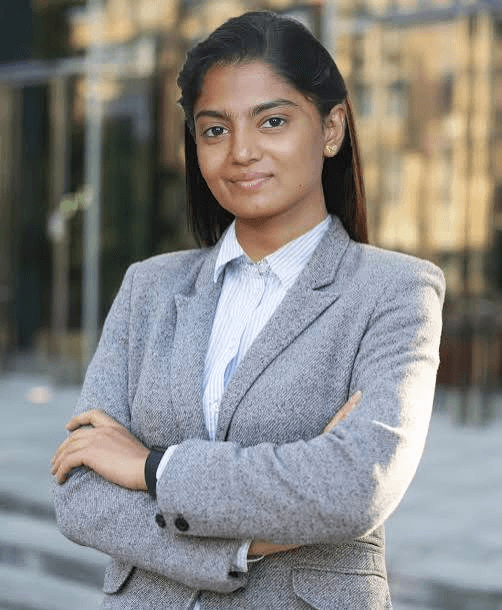
For Karunya Gunavathy, the issue has always been personal.
She grew up in Perumalpatti in Tamil Nadu's Tenkasi district. Her aunt developed tuberculosis after working as a bidi roller, a memory that stayed with Karunya long after.
“I was in school, and since my own family was in survival mode, we couldn't do anything much,” Karunya told HerStory. She wasn't thinking about starting a company then.
Karunya became the first person in her family to graduate. Her father was a welder and her mother ran a small mess. She studied electrical engineering and later worked as a graphic designer and freelancer. Her work with the Voice of Tenkasi Foundation eventually brought her closer to issues around education, digital skills, financial literacy and livelihoods.
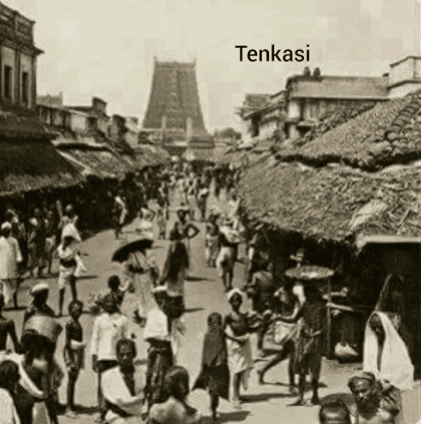
“A glimpse of Tenkasi, where history still walks the streets.”
In 2024, she surveyed women involved in bidi rolling across Tenkasi and Tirunelveli. The findings were striking: around 5 lakh women were estimated to be involved in bidi rolling in the region, 83% reported chronic respiratory conditions, and 93% said they would consider switching professions if another reliable source of income was available.
- 83% Chronic Respiratory ConditionsWomen experiencing breathing difficulties
- 17% No Chronic Respiratory ConditionsWomen without breathing problems
Number of women suffering from chronic respiratory diseases in Tenkasi
The problem, then, wasn't necessarily convincing women to leave bidi rolling. It was simply not giving them somewhere else to go.
Women in Tenkasi required a whole different skill-set to earn the livelihood. They needed training, time to learn, and, most importantly, a market for what they produced.
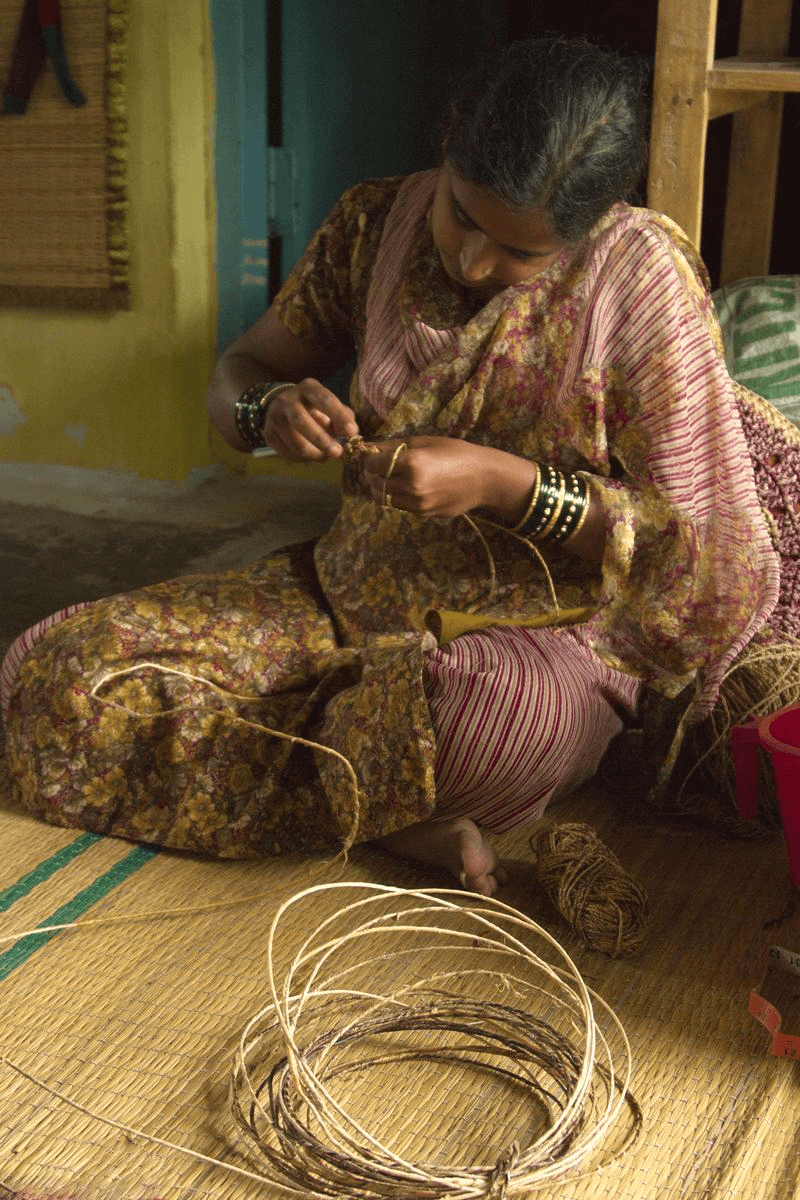
Kottravai works with women to create products using materials such as coconut shells, banana fibre and terracotta, along with food products. It handles much of the process around them — production, quality control, branding, packaging and sales.
From training to a business
That became the starting point for Kottravai, which Karunya founded in 2025.
The idea confirmed two corporate gifting orders worth ₹50 lakh each, with corporate gifting emerging as an important revenue opportunity.
That matters because for Kottravai, sales aren't separate from the social impact.
The business has to work for the livelihood model to work.
Karunya and her co-founder are currently bootstrapping the company. They want to create livelihood opportunities for 10,000 women over the next five years. A significant jump from the 55 women currently onboarded. And that is where the real challenge begins. Training 10,000 women is one problem. Creating enough demand, maintaining quality, building production capacity and ensuring the women earn sustainably is another.
Karunya has experienced the challenges first-hand. During one training programme, a venue booked for the women was taken over for a wedding. The team eventually conducted the session under a banyan tree in a temple compound.
There were other hurdles too, including misinformation around women losing access to PF and ESI benefits if they left bidi work early. These aren't problems that appear in a startup pitch deck. But they are part of building a business on the ground.
“I want Tenkasi to become a model district where women participate equally in the economy.”
The bigger ambition
Karunya's background in design, freelancing and community work has shaped the way she approaches Kottravai. She isn't only thinking about what women can make. She is also thinking about whether customers will buy it, whether the margins make sense and whether the model can grow.
Her ambition goes beyond building a successful company. “I want Tenkasi district to become the Estonia of Asia,” she says. “I want Tenkasi to become a model district where women participate equally in the economy.”
It's an ambitious goal, especially for a bootstrapped company still finding its footing. But Karunya didn't start with a startup idea. She started with a problem she had seen for years. Now, Kottravai has to prove that a better livelihood can also become a sustainable business.
Want to hear more stories of founders building businesses around problems that are often overlooked? Follow Humans of Hustle for more.