Some founders chase the spotlight. Others disappear from it - only to return by building something even bigger.
When Elon Musk acquired Twitter in October 2022, one of his first decisions was to remove then-CEO Parag Agrawal. Overnight, one of the most recognisable names in global tech vanished from the headlines.
For many, that could have been the end of the story. For Parag, it was simply the beginning of a new one.
Today, less than four years later, his AI infrastructure startup Parallel Web Systems has reportedly reached a valuation of $2 billion, attracting backing from some of Silicon Valley's most respected investors. But the real story isn't the valuation - it's the mindset behind starting again.
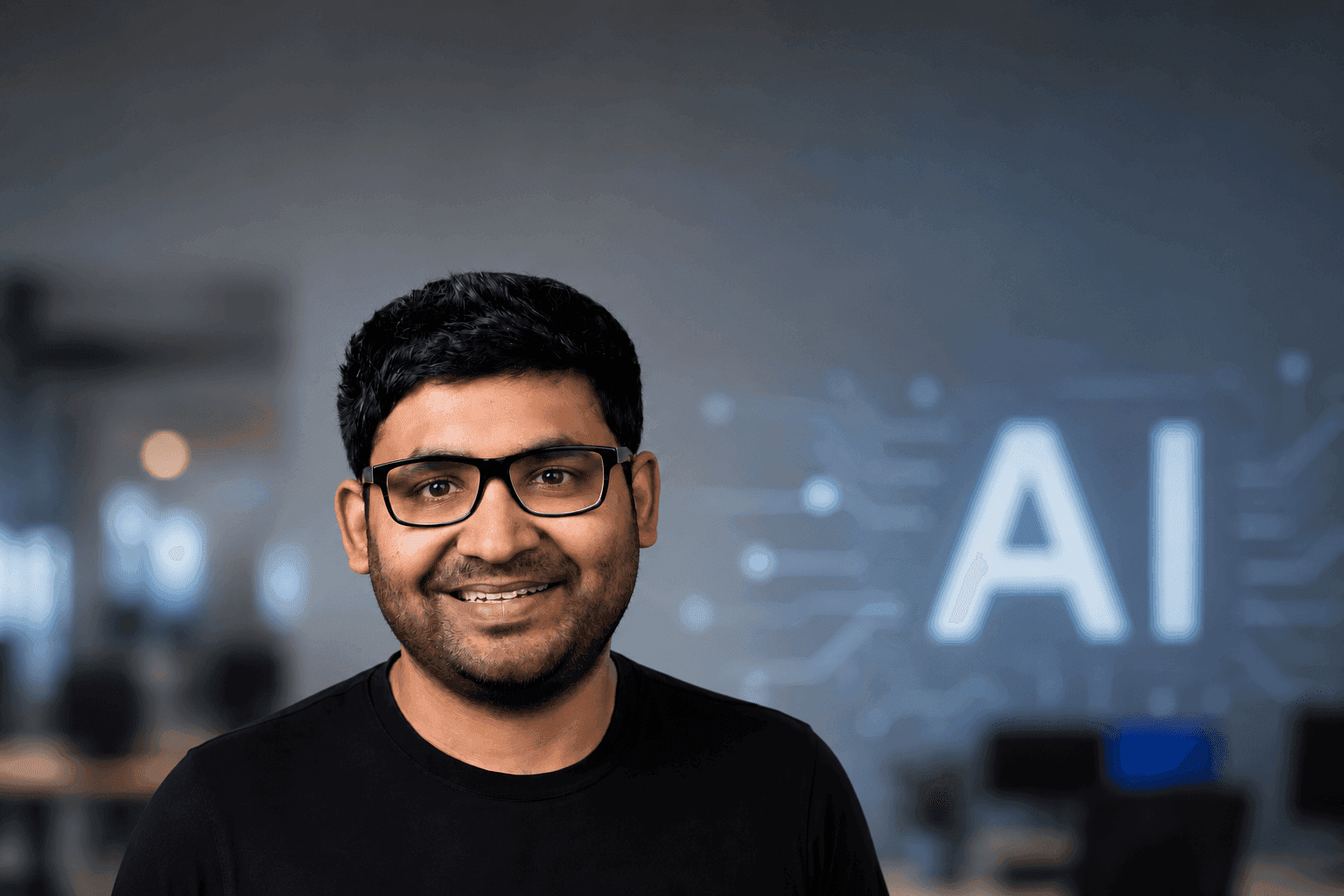
The Engineer Before the Executive
Long before boardrooms, acquisitions, and billion-dollar headlines, Parag Agrawal was an engineer fascinated by solving complex systems. After graduating from IIT Bombay with a degree in Computer Science, he went on to complete his PhD at Stanford University, where his research focused on distributed systems and large-scale computing - the very technologies that now power modern AI.
His early career included roles at Microsoft Research, Yahoo!, and AT&T Labs before he joined Twitter in 2011 as a software engineer.
Over the next decade, he quietly became one of the company's most influential technical leaders. While others became the public faces of Twitter, Parag was helping build the technology that kept the platform running. His deep technical expertise eventually earned him the role of Chief Technology Officer.
In 2021, Twitter co-founder Jack Dorsey handed him the CEO position, calling him the leader who best understood both the product and the engineering behind it.
A Public Exit That Changed Everything
Just eleven months into the CEO role, everything changed. Elon Musk completed Twitter's acquisition. Parag was dismissed on day one. The news dominated headlines around the world.
But instead of spending years talking about what happened, Parag spent his time thinking about what came next.
He didn't launch another social media platform. He didn't become a venture capitalist. He went back to what he knew best - engineering.
“But the real story isn't the valuation - it's the mindset behind starting again.”
Building for the AI Era
In 2024, Parag quietly launched Parallel Web Systems. The company isn't building another chatbot or AI assistant. Instead, it's solving a far more fundamental challenge. Today's internet was designed for people browsing websites. Tomorrow's internet needs to work for autonomous AI agents that can search, reason, retrieve information and complete tasks on their own.
Parallel is building the infrastructure that allows AI systems to interact with the web more intelligently, making it easier for developers and enterprises to build reliable AI applications at scale. It's the kind of company most consumers may never directly use. But many AI products of the future could end up relying on it.
Why Investors Are Paying Attention
Parallel has reportedly raised hundreds of millions of dollars from leading venture firms, including Sequoia Capital, Kleiner Perkins, Khosla Ventures, Index Ventures, First Round Capital, Spark Capital, and Terrain Capital.
The company's reported $2 billion valuation reflects growing confidence that AI's next wave won't just be about better models - it will also depend on stronger infrastructure.
As AI agents become capable of performing increasingly complex tasks online, the systems enabling them to navigate the internet efficiently could become just as valuable as the models themselves.
The Human Behind the Hustle
Parag Agrawal's story isn't one of overnight success. It's a story about identity.
After reaching the top of one of the world's biggest technology companies, he found himself starting from zero again. Many people spend their careers trying to avoid failure. Founders understand that every ending creates space for another beginning.
Instead of chasing another CEO title, Parag returned to what had always defined him - building difficult technology with long-term impact. Because sometimes the strongest comeback isn't proving people wrong.
Sometimes the strongest comeback isn't proving people wrong.
It's quietly building something so meaningful that the world has no choice but to pay attention.